Rounding errors in scientific grading scripts can distort your lab data results, impacting final grades by up to 1.0 points or more. Inconsistent rounding conventions and floating-point arithmetic limitations contribute to these inaccuracies. Misinterpretations of precision can further misrepresent your performance, leading to misleading evaluations. Understanding the common pitfalls and the technology behind grading systems can help you navigate these challenges effectively. Explore more on enhancing accuracy in assessments and improving your academic experience.
Understanding Rounding Errors in Academic Grading
When you analyze grading systems in academia, it’s crucial to recognize how rounding errors can greatly impact student outcomes. These errors often arise from the rounding techniques employed in calculating final grades, which can lead to discrepancies that affect grading fairness.
For instance, a student with a score of 89.5 might receive a lower grade than a peer with an 89.6, despite minimal differences in performance. Such inconsistencies can create a perception of injustice in an otherwise meritocratic system.
Common Causes of Rounding Errors in Lab Grading Scripts
Rounding errors in lab grading scripts often stem from specific programming choices and mathematical conventions that can skew results. Understanding these common causes can help you avoid pitfalls in your grading process:
- Inconsistent Rounding Conventions: Different scripts may apply various rounding rules, leading to discrepancies in final scores.
- Data Representation Issues: How data is stored and represented in scripts can affect precision, especially when converting between data types.
- Floating-Point Arithmetic: The inherent limitations of floating-point representation can introduce rounding errors during calculations, impacting overall accuracy.
How Rounding Errors Affect Students’ Lab Grades
Although many factors contribute to students’ lab grades, rounding errors can greatly distort their final scores. When grading scripts inaccurately round values, it creates significant grade discrepancies that misrepresent students’ true performance.
This distortion affects impact assessments, leading to unfair evaluations and misplaced academic confidence. You might receive a lower grade than deserved, undermining your understanding of the material.
Additionally, rounding errors can compound over multiple assessments, exacerbating the discrepancies. This not only impacts your grades but can also influence future opportunities, such as scholarships or research positions.
As institutions increasingly rely on automated grading systems, addressing rounding errors becomes essential to guarantee equitable assessments that genuinely reflect the lab skills and knowledge of students in online schools k-12.
Misinterpretations of Precision in Scientific Data
When you analyze scientific data, it’s essential to understand how precision is often misinterpreted.
These misunderstandings can compromise data integrity and lead to significant errors in results.
Common Misunderstandings Explained
Misunderstanding precision in scientific data can lead to significant errors in interpretation and analysis. You might encounter various grading misconceptions that obscure the true value of your data.
Here are three common precision challenges:
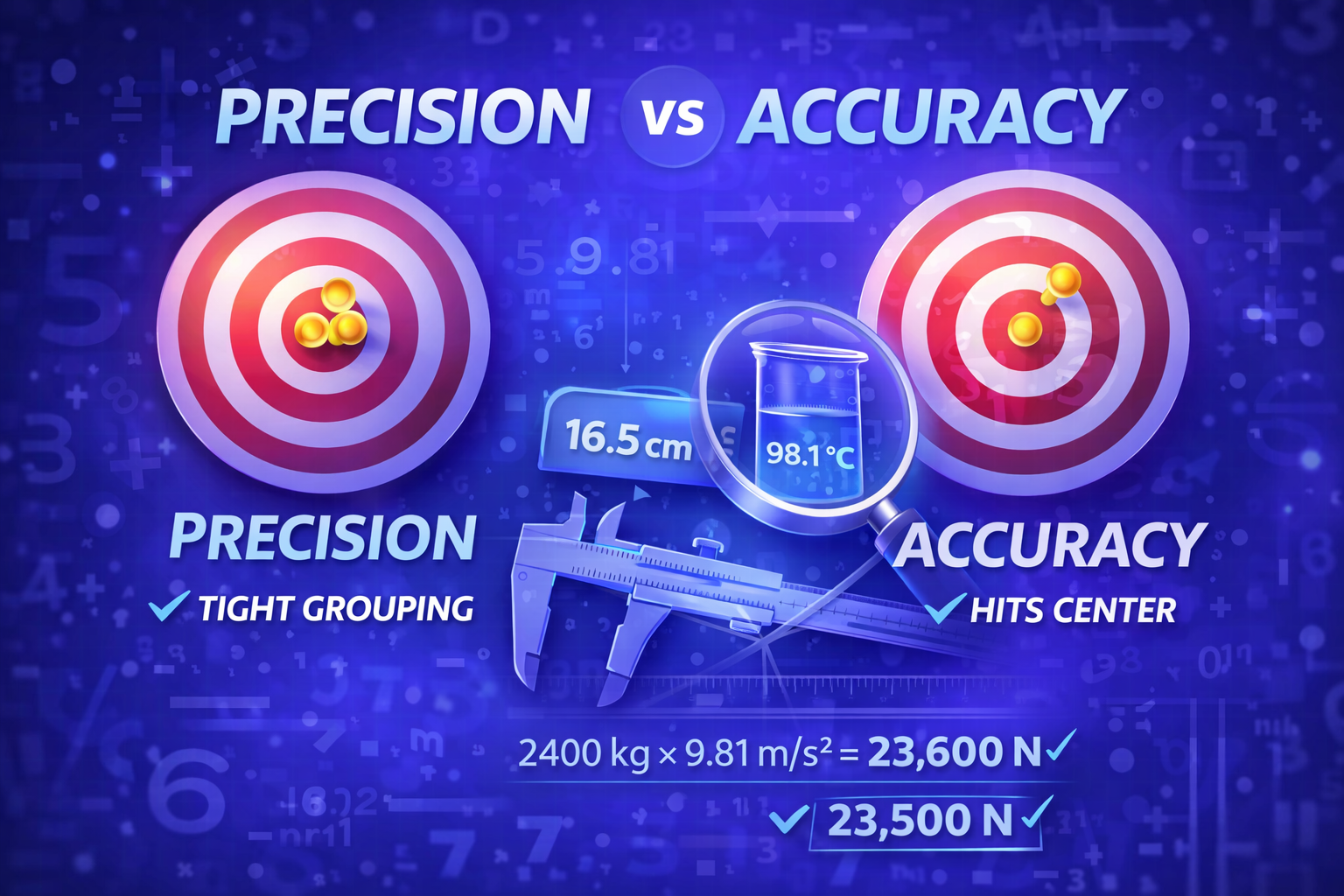
- Confusing precision with accuracy: Precision refers to the repeatability of measurements, while accuracy indicates how close measurements are to the true value.
- Overreliance on significant figures: Misapplying significant figures can result in misleading representations of data quality.
- Ignoring measurement uncertainty: Every measurement carries inherent uncertainty; neglecting this can skew your data analysis.
Recognizing these misunderstandings is vital for effective scientific communication and guarantees that your findings reflect their true precision, avoiding pitfalls that can arise from improper data interpretation.
Impact on Data Integrity
As you explore scientific data, the impact of misinterpreting precision can severely compromise data integrity.
When rounding errors occur in grading scripts, they can distort the true representation of measurements. This distortion affects data validation, leading to incorrect conclusions. You might find that results, deemed statistically significant, are actually unreliable due to these inaccuracies.
Misinterpretations can mislead researchers, skewing experimental outcomes and hindering advancements. As you analyze precision in your data, remember that even minor discrepancies can escalate, resulting in substantial ramifications for your findings.
Strategies for Improved Accuracy
Rounding errors can lead to significant misinterpretations in scientific data, making it imperative to adopt strategies that enhance accuracy.
To achieve accuracy improvement in precision measurement, consider the following:
- Implement Consistent Rounding Rules: Establish a standard for rounding that’s used throughout your data analysis to avoid discrepancies.
- Utilize Software with High Precision: Choose scientific grading scripts that maintain precision to the desired decimal place, reducing the likelihood of rounding errors.
- Regularly Review Data Entry Practices: Confirm accurate data input by verifying entries, which can prevent initial errors from propagating through your analysis.
How Automated Grading Affects Academic Integrity
While automated grading systems streamline assessment processes, they can inadvertently compromise academic integrity.
By relying heavily on automated assessments, educators risk creating environments where students may prioritize grades over genuine learning. The speed and efficiency of these systems can lead to superficial evaluations, encouraging practices that undermine academic honesty.
Students might exploit the predictability of grading algorithms, engaging in plagiarism or submitting work that doesn’t reflect their understanding. In addition, the lack of personalized feedback from automated systems can hinder essential dialogue about academic integrity.
To safeguard educational values, it’s vital to balance the benefits of automation with rigorous oversight, ensuring that assessments promote learning and uphold the principles of honesty and ethical conduct in academic environments.
Identifying Rounding Problems and How to Solve Them
When you analyze grading scripts, it’s crucial to recognize that rounding errors can greatly impact students’ final scores. Identifying these issues is the first step toward implementing effective error corrections.
Here are three common rounding problems you might encounter:
- Inconsistent Rounding Techniques: Guarantee all calculations use the same method to avoid discrepancies.
- Precision Loss: Be wary of how many decimal places your scripts round to; too few can greatly alter results.
- Cumulative Errors: Multiple rounding throughout a script can lead to substantial inaccuracies; review each step carefully.
Effective Techniques for Educators to Prevent Rounding Errors
To effectively prevent rounding errors in grading, you should standardize grading criteria across all assignments.
This consistency minimizes ambiguity in scoring and helps guarantee accuracy.
Additionally, employing precision tools can enhance the accuracy of your calculations, reducing the risk of discrepancies.
Standardize Grading Criteria
Establishing standardized grading criteria is essential for educators aiming to minimize rounding errors and guarantee fairness in assessment.
By adopting a consistent framework, you can confirm that all students are evaluated on an equal basis, enhancing grading fairness.
Here are three effective techniques to implement:
- Define Clear Rubrics: Create detailed rubrics that outline expectations for each grade level, allowing students to understand what’s required.
- Use Fixed Decimal Points: Decide on a specific number of decimal places for grading and stick to it across all assessments to reduce variability.
- Regularly Review Assessments: Periodically assess the grading process to identify any discrepancies in standardized assessments, confirming accuracy and fairness in results.
Implementing these techniques can greatly reduce rounding errors in your grading practices.
Use Precision Tools
Precision tools play an essential role in minimizing rounding errors in grading scripts. By implementing precision measurement techniques, you can guarantee that your data remains accurate throughout the grading process.
Utilize calibrated tools to collect and analyze lab data, as proper tool calibration directly influences the reliability of your results. Regularly verify and adjust these tools to maintain accuracy, preventing minor discrepancies from snowballing into significant errors.
Encourage students to engage with precision instruments, enhancing their understanding of measurement accuracy. Additionally, integrating software that supports precise calculations can further reduce rounding errors.
Lessons Learned From Case Studies on Grading Errors
As grading errors can considerably impact students’ academic outcomes, examining case studies offers valuable insights into their underlying causes and solutions.
Through case study analysis, you can identify critical factors affecting grading methodology. Here are three lessons learned:
- Precision Matters: Even minor rounding discrepancies can lead to significant overall score variations.
- Script Consistency: Ensuring that grading scripts are uniformly applied across all datasets minimizes errors.
- Feedback Loops: Establishing a system for reviewing and correcting errors fosters a culture of continuous improvement in grading accuracy.
Future Trends in Enhancing Grading Precision
While advancements in technology continue to reshape educational practices, the pursuit of enhanced grading precision remains paramount.
Future innovations in grading technology promise to mitigate inaccuracies stemming from rounding errors, which have plagued traditional methods. You’ll likely see the integration of machine learning algorithms that analyze lab data patterns, providing real-time feedback and adjusting grading criteria based on context.
Additionally, blockchain technology could offer immutable records of student submissions, ensuring transparency and accuracy in grading processes. As these technologies evolve, they’ll empower educators to make informed decisions, fostering a more equitable assessment environment.
Ultimately, embracing these advancements won’t only refine grading precision but also enhance the overall educational experience for both instructors and students.
Best Practices for Evaluating Lab Data Accurately
To accurately evaluate lab data, it’s crucial to implement systematic methodologies that minimize errors at every stage of the process.
Here are three best practices you should follow for effective data validation and grading consistency:
- Standardize Procedures: Develop clear protocols for data collection and analysis to guarantee consistency across experiments, reducing variability.
- Regular Calibration: Frequently calibrate your equipment to maintain accuracy and reliability in your measurements, preventing drift that can lead to miscalculations.
- Peer Review: Incorporate peer review of data analysis to catch potential errors and enhance the overall integrity of your findings.
Conclusion
To summarize, while some might argue that rounding errors are minor nuisances, they can greatly distort a student’s academic journey. By understanding and addressing these pitfalls in grading scripts, you can guarantee that precision in lab data is upheld, promoting fairness and integrity in evaluations. Embracing best practices not only benefits students but also enhances your credibility as an educator. Let’s prioritize accuracy in grading to foster a more equitable academic environment for everyone involved.
Related Post