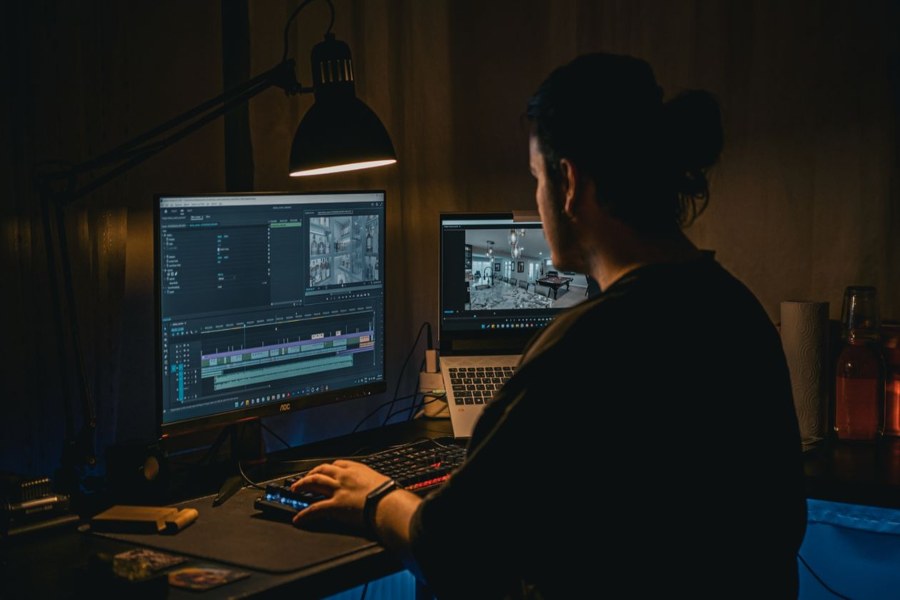
The production economics of video content changed fundamentally in early 2026. A 30-second video ad with cinematic cuts, native audio synchronization, and multi-shot editing now costs approximately $2.19 to generate using current AI video models. The traditional equivalent, a 30-second professionally produced spot, runs between $3,000 and $100,000 depending on the production level. The model most responsible for this shift is Seedance 2.0, available through Higgsfield alongside six other leading AI video models under one subscription.
Seedance 2.0 is a multimodal AI video generation model built by ByteDance, the company behind TikTok and CapCut. It generates video and audio together in one processing pass rather than producing a silent clip that needs sound added afterward, and it accepts up to 12 reference inputs combining images, video clips, audio files, and text simultaneously. These two characteristics, native audio-video generation and a role-based multimodal input system, make it structurally different from most AI video tools available before 2026, and they are the primary reasons content creators are adopting it at scale this year.
Who Built Seedance 2.0 and When Was It Released?
ByteDance’s Seed research team built Seedance 2.0 and released it on February 10, 2026. It was initially deployed within ByteDance’s Jimeng platform, which operates primarily in China. The model became globally accessible through international platforms including Higgsfield, where it sits alongside Veo 3.1, Kling 3.0, Wan 2.7, and other leading AI video models in a single workspace.
The ByteDance origin matters for understanding what Seedance 2.0 was designed to do well. ByteDance runs TikTok and CapCut, which together represent one of the largest short-form video ecosystems in the world. The team that built Seedance 2.0 had access to extensive data on how short-form video is consumed, what makes it engaging, and what production characteristics separate viral content from content that gets scrolled past. This shaped specific design decisions in Seedance 2.0: the native audio synchronization, the automatic multi-shot editing, and the character consistency across scenes all reflect a deep understanding of what social video actually needs to perform.
What Makes Seedance 2.0 Different from Other AI Video Tools?
Three structural differences separate Seedance 2.0 from the broader category of AI video tools, and understanding them is the most direct path to understanding why creators are switching. These distinctions also become especially clear when comparing Seedance 2.0 vs Kling 3.0, as the two platforms take different approaches to video generation, multimodal inputs, and storytelling.
The first difference is unified audio-video generation. Most AI video tools build video and audio as separate problems. The video model generates frames, the audio is added afterward, and the synchronization between the two requires manual alignment in post-production. Seedance 2.0 generates both in the same processing pass using a dual-branch diffusion transformer architecture, meaning the sound and the visuals are produced simultaneously while sharing information. A footstep sound lands at the exact frame where the foot hits the ground. A voice-over phrase aligns to the exact visual moment it describes. The audio is not added to the video. It is generated with the video.
The second difference is the multimodal reference input system. Most AI video tools accept text and sometimes an image or two. Seedance 2.0 accepts up to 12 distinct reference assets in a single generation: up to 9 images, 3 video clips, 3 audio files, and unlimited text prompts, all simultaneously. Each input can be assigned a specific role in the prompt. A product image defines what the subject looks like. A short video clip sets the camera movement style. An audio file establishes the rhythm the video should follow. A portrait photo anchors the character’s appearance across every shot. This turns the generation from a single description into a directed creative brief.
The third difference is automatic multi-shot storytelling. Earlier AI video tools produced a single continuous take, which meant a creator who described a scene with three distinct moments received one clip attempting to contain all three, usually resulting in visual crowding or rushed transitions. Seedance 2.0 reads a narrative prompt, identifies the distinct beats in the description, generates a separate camera shot for each, and assembles them with transitions automatically. The output resembles edited footage rather than a raw AI clip.
How Does the Multimodal Input System Actually Work?
The reference input system in Seedance 2.0, accessible through Higgsfield’s platform, is where the most practical creative control lives. Understanding how to use it reduces the gap between the video a creator imagines and the video that is generated.
Each input type serves a distinct creative function. Images are used to anchor visual identity: the appearance of a character, the look of a product, the aesthetic of a location, or the overall color tone of a scene. A product photo uploaded as a reference tells the model exactly what the product looks like rather than asking it to interpret a text description of the product’s appearance. A portrait photo anchors a character’s face, clothing, and style across multiple generated shots without the visual drift that occurs when appearance is described in text alone.
Video clip references are used to anchor motion rather than appearance. Uploading a short clip of a specific camera movement, a slow orbit, a dolly push, a handheld track, tells the model to replicate that movement style rather than interpret a camera direction term. This is a significant creative control mechanism: rather than trying to describe “a slow cinematic push toward the subject with slight focus breathing” in text, a creator can upload a 5-second clip that demonstrates the movement.
Audio file references serve two functions: rhythm anchoring and vocal style guidance. For music-driven content, uploading a section of the track allows the model to align visual cuts to the beat of the music natively in the generated output. For voiceover-led content, uploading an audio sample allows the model to replicate the tone and speaking style in the generated speech.
Within Higgsfield’s implementation of Seedance 2.0, these inputs are uploaded alongside the text prompt in the same interface, with the @ mention convention available to assign specific roles to each asset. This brings together the full reference system in one generation session rather than requiring separate workflows for visual, motion, and audio direction.
What Are the Key Features of Seedance 2.0?
| Feature | What It Does | Why Creators Care |
| Unified multimodal generation | Accepts text, image, video, and audio simultaneously | Replaces text-only guesswork with directed creative control |
| Native audio-video sync | Sound generated in same pass as video | Eliminates post-production audio alignment step entirely |
| Multi-shot storytelling | Automatically breaks narrative into multiple camera shots | Produces edited output rather than a single continuous take |
| Character consistency | Preserves faces, clothing, and details across shots | Enables episodic and branded content without visual drift |
| Motion replication from clip | Extracts camera movement signature from reference video | Director-level camera control without technical expertise |
| Beat-aware audio sync | Aligns visual pacing to the rhythm of uploaded audio | Music-driven content lands on beat natively in one generation |
| Multiple aspect ratios | Supports 16:9, 9:16, 4:3, 3:4, 21:9, and 1:1 | Platform-native output without reformatting after generation |
| Up to 15 seconds per shot | Generates clips up to 15 seconds, assembleable into longer sequences | Covers short-form social and can be extended for longer formats |
| High-quality output | High-fidelity video delivery with cinematic motion quality | Publication-ready for social media and web use |
| Available on free plan | Accessible through Higgsfield’s free tier | Creators can evaluate quality before committing to a subscription |
How Does Seedance 2.0 Compare to Kling 3.0 and Veo 3.1?
The three models that define the current capability tier for AI video generation are Seedance 2.0, Kling 3.0, and Veo 3.1. Each has genuine strengths that make it the right choice for specific use cases. Understanding the comparison helps creators decide when to use which model, particularly on multi-model platforms like Higgsfield where all three are available within the same workspace.
| Capability | Seedance 2.0 | Kling 3.0 | Veo 3.1 |
| Native audio-video sync | Yes, generated in one pass | Partial native audio | Standard model with audio |
| Maximum reference inputs | 12 (images, video, audio, text) | Images and video clips | Up to 3 images plus text |
| Motion replication from clip | Yes, camera signature extraction | Limited motion reference | Start and end frame control |
| Beat-aware audio sync | Yes, native to the model | Not natively supported | Not natively supported |
| Auto multi-shot editing | Yes, automatic shot breakdown and assembly | Yes, up to 6 auto cuts | Via scene extension workflow |
| Character consistency | Yes, maintained across shots | Strong, industry-leading | Yes |
| Global access | Via Higgsfield and other platforms | Global web platform | Limited partner access |
| Best for | Audio-synced social content, product demos, music videos | Photorealistic human subjects, premium lifestyle | Polished cinematic brand content, 4K quality |
The comparison reveals that Seedance 2.0 is strongest when audio plays a significant role in the creative direction, when the creator wants a multi-shot assembled output from a single prompt, or when the production involves multiple reference inputs that need to be coordinated into one generated video. Kling 3.0 wins on pure photorealistic human rendering quality. Veo 3.1 wins on 4K output resolution and cinematic visual fidelity for premium brand content. All three are accessible through Higgsfield in a single workspace, which makes choosing the right model per project a one-click decision rather than a multi-account management problem.
What Creator Use Cases Does Seedance 2.0 Handle Best?
TikTok and Short-Form Social Content
Seedance 2.0 was designed by a team with deep short-form video expertise. Its 9:16 native aspect ratio support, automatic multi-shot editing, and beat-aware audio sync make it specifically well-suited for content that needs to hold attention across a 15 to 30 second Reel, TikTok, or YouTube Short. A creator who uploads a reference track, a character photo, and a brief scene description receives a vertically framed, multi-shot, audio-synced clip in one generation.
Product Demo and eCommerce Videos
A product image uploaded as a reference in Higgsfield’s Seedance 2.0 workspace becomes the anchor for the generated video: the model knows exactly what the product looks like and generates footage showing it in motion and in context rather than interpreting a text description of the product. For eCommerce sellers and DTC brands producing product showcase content, this eliminates the need to describe product appearance in the prompt and produces more accurate product representation in the output.
Music Videos and Beat-Synced Content
No other current AI video model handles the rhythm-to-visual synchronization problem as completely as Seedance 2.0. Uploading a section of a music track and a scene description produces video where the visual cuts fall on the musical beats rather than being manually aligned in a video editor afterward. For musicians, podcasters, and audio-first creators who need visual content that moves with their sound, this is the primary reason to use Seedance 2.0 over alternatives.
Branded Character Series
Seedance 2.0’s character consistency feature, accessible through Higgsfield, maintains the appearance of a character across separately generated shots. A brand mascot introduced in the first video appears identically in the fifth without the visual drift that defeats recognizable character identity in AI-generated episodic content. For brands and content series that depend on character recognition, this consistency is the practical mechanism that makes episodic AI video content viable.
Ad Creative Variants
A 30-second ad concept can be generated in multiple visual variations using the same character reference, product reference, and audio reference but with different scene descriptions. Each variation is a distinct ad creative for A/B testing across platforms. The combination of fast generation time on Higgsfield and the reference input system that keeps visual identity consistent across variants makes this kind of creative testing economically viable at a scale that traditional production cannot match.
Pre-Visualization for Filmmakers and Video Producers
Directors and producers can use Seedance 2.0 on Higgsfield to generate pre-visualization sequences from shot descriptions before committing to production resources. A reference video clip for camera movement, a location reference image, and a scene description together produce a workable visual representation of a planned shot within minutes.
How Do You Access Seedance 2.0 and Start Using It?
The most practical global access point for Seedance 2.0 is Higgsfield’s platform at higgsfield.ai/seedance/2.0. Higgsfield provides Seedance 2.0 alongside six other AI video models including Veo 3.1, Kling 3.0, Wan 2.7, Kling o1, and Kling 2.6, all accessible within the same browser-based workspace without installing software or managing separate accounts for each model.
The free plan on Higgsfield includes daily free generations, which is enough to run a first generation session with Seedance 2.0, evaluate the output quality against a specific use case, and develop a sense of how the reference input system produces results before upgrading to a paid plan for higher volume production.
The practical starting workflow is: upload a character or product reference image, write a scene description that covers the visual setting and the emotional register of the content, select 9:16 for social content or 16:9 for YouTube and horizontal placements, and generate. For audio-synced content, add an audio file reference to the same session and include a reference to it in the prompt. The built-in prompt enhancer in Higgsfield refines the description before it reaches the model, which is useful for creators who are new to AI video prompting.
As SigFigCalculator.io’s own coverage of Nano Banana Pro versus Nano Banana 2 explored in the context of AI image model selection, the decision of which AI model to use for a specific creative task produces meaningfully different results than defaulting to one model for everything. The same principle applies to AI video: Seedance 2.0 on Higgsfield is the right choice when audio synchronization, multi-shot assembly, or multimodal reference control are the primary requirements of the project.
What Are the Known Limitations of Seedance 2.0?
Three practical limits are worth knowing before building a production workflow around Seedance 2.0.
Clip length is capped at 15 seconds per generation. For longer-form content, the workflow requires generating individual clips and assembling them into a sequence. Seedance 2.0’s automatic multi-shot storytelling handles the assembly from a single narrative prompt for content up to roughly 30 to 45 seconds, but for longer pieces the creator needs to plan individual scenes and generate each as a separate clip. This is a workflow consideration rather than a quality barrier, and Higgsfield’s Soul ID and first/last frame controls help maintain visual continuity across separately generated clips.
Complex physics in edge cases, including fast fluid dynamics, fine cloth movement in wind, and high-speed particle effects, still produce occasional artifacts in the best current models including Seedance 2.0. For content where these physical edge cases appear prominently, reviewing and selecting the strongest generation from a small batch rather than using the first output is the practical approach.
Native long-form audio is not supported for tracks beyond 15 seconds per reference clip. For music video content built around a full song, the practical approach is to use a 15-second section of the track as the rhythm reference for each generated clip rather than uploading the full track.
Is Seedance 2.0 Worth Using for Your Content in 2026?
The economics are the clearest argument. At approximately $0.073 per second of generated video, the cost of producing 60 seconds of content, across multiple shots, with native audio, is under five dollars. The traditional production equivalent for 60 seconds of commercially usable video runs from $6,000 to $200,000 depending on the quality tier. For any creator or brand producing visual content at scale, the cost comparison makes AI video generation a financial necessity rather than an experimental choice.
Within the current landscape of AI video models, Seedance 2.0 occupies a specific position: it is the most complete model for projects where audio plays a central creative role, where the creator wants to provide multiple reference inputs for precise visual and motion direction, and where a multi-shot assembled output is more valuable than a single photorealistic take. Kling 3.0 and Veo 3.1 each excel in their own areas. What makes Higgsfield’s multi-model workspace valuable is that choosing between them is a one-click decision rather than a multi-subscription management problem.
For creators starting with AI video in 2026, Seedance 2.0 on Higgsfield with the free plan is the most practical starting point. The native audio sync eliminates the most frustrating part of AI video post-production. The multi-shot storytelling eliminates the need to manually edit multiple clips into a sequence. And the multimodal input system provides more creative control than text-only generation tools without requiring any technical expertise to use.